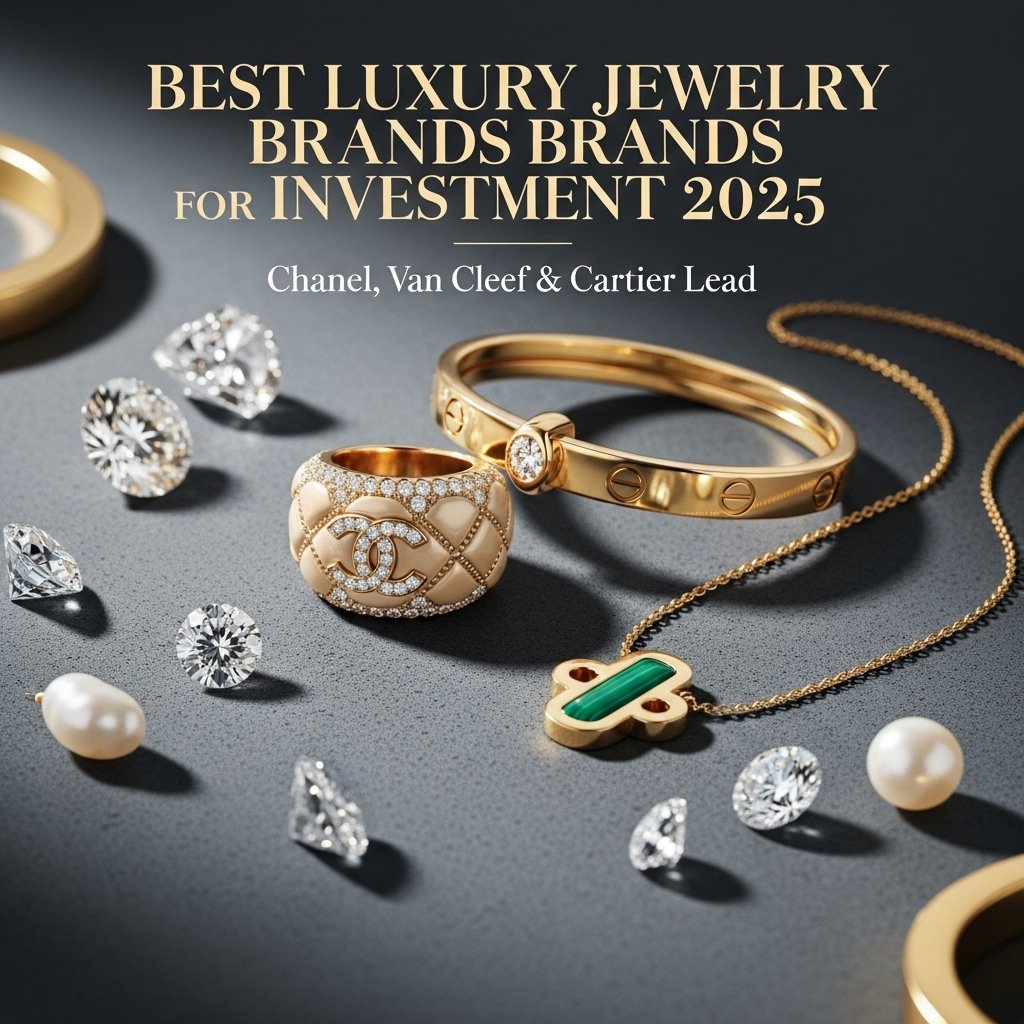
Not all luxury jewelry is created equal when your bank account is on the line. Rebag’s 2025 Clair Report analyzed millions of transactions and delivered the verdict: Van Cleef & Arpels and Cartier dominate the fine jewelry resale market, with Van Cleef pieces consistently outperforming across value retention and liquidity metrics. But here’s the plot twist—vintage Chanel costume jewelry from the 1980s-90s is crushing contemporary fine jewelry from most brands, appreciating 100-300% while your new Tiffany necklace loses 35% the moment you leave the store. If you’re treating jewelry as an asset class in 2025, these three brands are your blue-chip holdings—everything else is speculation.
The 2025 Resale Value Hierarchy: Hard Data, Zero Marketing Spin
Rebag’s 2025 report doesn’t care about brand prestige or celebrity endorsements. It tracks cold, hard resale percentages across authenticated transactions. The jewelry segment “solidified its status as investible assets” this year, driven by gold price surges and global tariffs that pushed buyers toward secondary markets.
Hermès Jewelry: 92% Retention (But Good Luck Finding It)
Hermès achieved 138% average retention across all products in 2025, up 38% year-over-year. Their jewelry, while less documented than handbags, follows similar patterns—limited production, boutique exclusivity, waitlists measured in years. The problem? You can’t actually buy Hermès jewelry on demand. New purchase restrictions (two items per client annually) create artificial scarcity that benefits current owners but locks out new investors.
Van Cleef: 86% + 30-Day Liquidity
Van Cleef leads the accessible luxury jewelry investment category with 86% average resale retention and sell-through times averaging 30 days on authenticated platforms. The Alhambra collection drives this performance—four-leaf clover motifs in discontinued stones like turquoise, malachite, and onyx appreciate immediately after purchase. This isn’t theoretical. Rebag’s data confirms Van Cleef pieces move faster and retain more value than any competitor except Hermès.
Cartier: 81% Average (70% for Love, 85% for Panthère)
Cartier’s 81% average masks massive collection-dependent variance. The Love Bracelet sits at 70% retention due to market oversaturation, while Panthère de Cartier jewelry and Juste un Clou pieces hit 80-90%. High jewelry and vintage pieces (Trinity, Tutti Frutti, pre-1980 designs) routinely exceed 100% at auction. Buy Cartier selectively—icons and vintage only.
Chanel: 78% on Vintage, 65% on Contemporary
Chanel’s jewelry story splits into two universes. Pre-2000 vintage signed pieces (Gripoix glass, baroque pearls, CC logo brooches) have appreciated 100-300% over two decades. Contemporary fine jewelry collections like Coco Crush and Camélia? They depreciate to 60-70% of retail, performing worse than Van Cleef and Cartier. The Chanel investment play is vintage costume jewelry, not new fine jewelry.
The Brands That Destroy Your Money
Let’s save you from expensive mistakes.
Tiffany & Co. retains 65-70% on most collections despite LVMH’s 2025 repositioning efforts. Mass market presence and mall-adjacent perception kill resale premiums. Bulgari sits at 60-70% average, except for Serpenti and B.zero1 icons which hit 75-80%. David Yurman is resale poison—expect 40-55% retention because the secondary market treats it like mall jewelry, not investment-grade luxury.
Van Cleef & Arpels: The Gold Standard (Literally and Figuratively)
Van Cleef emerged as 2025’s standout jewelry performer in Rebag’s report, benefiting from “increased cost of gold and other raw materials due to global tariffs” that pushed prices up across primary and secondary markets. But the brand’s dominance predates 2025—it’s structural, not cyclical.
Why Alhambra Outperforms Everything
Controlled distribution prevents oversaturation. Icon status (the four-leaf clover is universally recognized) eliminates buyer education barriers. Material diversity (mother-of-pearl, onyx, carnelian, malachite, diamonds) creates collection depth without diluting brand identity. And critically, Van Cleef rarely discounts or floods outlets, preserving secondary market pricing power.
Vintage 1960s-70s Pieces: 200-500% Appreciation
Original Alhambra designs from the 1960s-1970s now command 2-5x their original retail prices at auction houses like Sotheby’s and Christie’s. Collectors pay premiums for early hallmarks, unpolished patina, and provenance (celebrity ownership, museum exhibition history). These aren’t wearable accessories—they’re portable art with serial numbers.
30-Day Sell-Through = Portfolio Liquidity
Real estate takes months to liquidate. Stocks require market timing. Alhambra pieces move in 30 days or less on authenticated platforms with minimal price negotiation. This liquidity transforms jewelry from “vanity purchase” to “liquid asset”—a critical distinction for portfolio diversification and estate planning.
The Pieces to Buy: Alhambra Hierarchy
Not every clover is equal.
Diamond pavé Alhambra tops the food chain—full diamond pieces retain 85-95% and appreciate on vintage models. Discontinued stones (malachite, lapis lazuli, turquoise) command 40%+ premiums over retail because Van Cleef won’t reissue them. Mother-of-pearl and guilloché represent your 80-90% retention baseline—safe, predictable, always liquid. Onyx performs well but sits below mother-of-pearl in buyer demand.
Size matters less than material, but Magic Alhambra (larger motifs) attracts serious collectors willing to pay premiums. Sweet Alhambra offers lower entry prices but slower appreciation.
Chanel Jewelry: Vintage Crushes Contemporary
Chanel raised handbag prices 4-5% in August 2025, with Classic Flaps jumping $500 across all sizes. This pattern extends to jewelry—annual increases that benefit pre-owned owners while punishing new buyers.
Pre-2000 Signed Pieces = 100-300% Gains
Vintage Chanel costume jewelry (not fine jewelry) from the 1980s-1990s has exploded in value. Statement necklaces that retailed for $800-$1,500 now sell for $2,000-$8,000 depending on rarity and condition. Gripoix glass pieces, baroque pearl strands, and oversized CC brooches command the highest premiums. These pieces defined an era of maximalist fashion and now serve as wearable nostalgia for collectors.
Contemporary Fine Jewelry = 60-70% Retention
Chanel’s Coco Crush rings and Camélia pendants depreciate to 60-70% of retail on secondary markets. They’re beautiful, but they’re not investments. The brand’s fine jewelry lacks the controlled scarcity that drives Van Cleef and Cartier pricing. Chanel releases too much inventory relative to demand, creating resale competition that tanks prices.
Costume Jewelry Paradox: Better ROI Than Gold
Here’s the absurdity: Chanel’s costume jewelry (base metal, glass, crystals) outperforms most brands’ fine jewelry (18k gold, diamonds) in resale appreciation. Scarcity drives value, not material cost. A signed 1990 Chanel brooch with provenance beats a 2024 Tiffany diamond pendant in ROI every time.
Authentication Hell: Chanel Fakes Everywhere
The counterfeit Chanel vintage jewelry market exploded 2020-2025 as values surged. Fake signatures, reproduction pieces marketed as “vintage,” and Frankenstein assemblies (real components mixed with fake elements) flood eBay, Etsy, and peer-to-peer marketplaces.
Expert authentication is non-negotiable. Services like Entrupy (AI-driven authentication) and specialist appraisers (vintage costume jewelry experts) cost $50-$300 but save thousands in losses. Unsigned vintage Chanel pieces lose 40% in value versus properly authenticated signed equivalents because buyers assume risk.
Cartier: Collection-Dependent Performance
Cartier’s 81% average conceals the truth: some collections crush, others crumble.
Panthère & Juste un Clou: 80-90% Retention
Panthère de Cartier jewelry (not watches—jewelry) retains 80-90% resale value because production volumes remain controlled and the panther motif carries icon status. Juste un Clou (the nail bracelet/ring collection) performs similarly, retaining 80-85% due to stronger scarcity versus the oversaturated Love Bracelet.
Love Bracelet: 70% Reality Check
We covered this extensively in prior analysis: the Love Bracelet sits at 70% retention due to market oversaturation. Hundreds flood resale platforms simultaneously, forcing sellers to compete on price. It’s still Cartier, so it holds some value—but it’s the weakest performer in the brand’s investment lineup.
High Jewelry & Vintage: 100%+ Appreciation
Cartier’s haute joaillerie (high jewelry) pieces—the $100K-$5M creations shown in boutique window displays—retain 90-110% because they’re effectively one-of-a-kind. Vintage Trinity rings, Tutti Frutti bracelets, and pre-1980 signed pieces routinely exceed original retail at auction. These require serious capital but deliver serious returns.
When Cartier Makes Sense
Three scenarios justify buying Cartier for investment.
Pre-price-increase purchasing: Cartier raises prices annually (typically May). Buying before hikes locks instant equity as secondary markets adjust upward to reflect new retail benchmarks. Limited editions and collaborations: Special releases with constrained production (anniversary pieces, artist collabs) appreciate 15-40% if you don’t wear them. Vintage with provenance: Celebrity ownership, museum exhibition history, or historical significance (1920s Art Deco pieces) command massive premiums at auction.
Emerging Contenders & Brands to Watch
Beyond the Big Three, niche performers deserve attention.
Bulgari Serpenti: 75-80% Retention
Bulgari’s average sits at 60-70%, but Serpenti jewelry specifically retains 75-80% because the snake motif achieved icon status. Asian markets (particularly China and Middle East) drive demand, creating geographic arbitrage opportunities. Buy Serpenti in Europe, sell in Hong Kong.
Graff & Harry Winston: 85-95% on High Jewelry
Ultra-high-end jewelers targeting $50K+ price points retain 85-95% because their clientele doesn’t care about “deals”—they care about immediate availability without waitlists. These pieces serve as portable wealth for international UHNW individuals navigating currency controls and asset portability.
Pomellato & Buccellati: 60-75%
Italian jewelers with strong European heritage but limited US penetration retain 60-75%. They’re niche plays for collectors who understand the brands, but lack the global liquidity of Cartier or Van Cleef. Buy only if you deeply understand the specific collection’s market.
How to Build a Jewelry Investment Portfolio
Diversification matters in jewelry just like stocks.
70% Van Cleef, 20% Cartier Icons, 10% Vintage Chanel
Model allocation for a $50K jewelry investment portfolio: $35K in Van Cleef Alhambra (mix of mother-of-pearl and discontinued stones for balance between liquidity and appreciation), $10K in Cartier Panthère or Juste un Clou (avoid Love Bracelet), $5K in authenticated vintage Chanel costume jewelry from the 1980s-1990s (high-risk, high-reward component).
This allocation prioritizes liquidity (Van Cleef moves fast), stability (Cartier icons hold 80%+ floors), and asymmetric upside (vintage Chanel can 3x-5x).
Buy Original Box & Papers Always
Complete sets (box, certificate, receipt, shopping bag) add 30-50% to resale value versus piece-only sales. That pink Van Cleef box isn’t packaging—it’s a $2,000 value-add when you sell. Photograph everything, store properly, and never discard documentation.
Avoid Trends, Chase Timeless
Rose gold surged 2015-2020 but now lags yellow gold in resale by 5-10%. Seasonal stones (limited edition colors) gamble on future collector interest. Yellow gold classic designs in iconic collections (Alhambra clover, Cartier panther, Chanel CC logo) deliver the most predictable returns because they transcend trends.
When to Sell: Market Timing Matters
Jewelry isn’t “set it and forget it”—timing impacts returns by 20-30%.
Q4 Holiday Demand (October-December Peak)
Luxury jewelry sells fastest and at highest prices October through December due to holiday gifting and year-end bonuses. List your pieces in late September to catch early buyers. Summer listings (June-August) sit longer and attract lowball offers.
Pre-Brand-Price-Increase Windows
When Cartier announces May price hikes, pre-owned values rise 2-5% in April-May as buyers rush to secondary markets to avoid paying new retail. Monitor brand announcements and list strategically.
Estate Sale vs Consignment vs Auction Strategy
Need cash in 30 days? Use authenticated consignment platforms (The RealReal, Rebag) for 70-75% of resale value. Have rare/high-value pieces worth $20K+? Auction houses (Sotheby’s, Christie’s) deliver 80-110% but take 4-6 months. Settling an estate with no time pressure? Direct buyers offer 60-65% instantly with zero hassle.
FAQ
Which luxury jewelry brand holds value best?
Van Cleef & Arpels leads with 86% average retention and 30-day sell-through on authenticated platforms, outperforming Cartier (81%) and all other accessible luxury brands.
Is Van Cleef better than Cartier for investment?
Yes. Van Cleef delivers 5% higher retention on average, faster liquidity (30 vs 60-90 days), and stronger appreciation on discontinued materials.
Does Chanel vintage jewelry appreciate?
Pre-2000 signed costume jewelry pieces have appreciated 100-300% over two decades, outperforming contemporary fine jewelry from most brands.
What jewelry brands should I avoid investing in?
David Yurman (40-55% retention), Tiffany & Co. (65-70%), and most fashion jewelry brands depreciate heavily due to mass market perception and oversupply.
How do I sell luxury jewelry for maximum value?
Sell October-December when demand peaks, use authenticated consignment for 70-75% of value in 30-60 days, and always include original box and papers.
References
https://www.rebag.com/clair-report/
https://www.forbes.com/sites/celiashatzman/2025/12/10/the-luxury-brand-that-just-reached-unicorn-status-according-to-resale-index/
https://www.luxurydaily.com/hermes-goyard-lead-consigner-sales-in-2025-rebag/
https://www.therelux.com/blogs/relux-blog/the-best-fine-jewelry-designers-for-investment-in-2025
https://blog.fashionphile.com/chanel-resale-value-how-to-maximize-profits/
https://www.sothebys.com/en/articles/understanding-the-latest-2025-chanel-bag-price-hikes-and-the-resale-market
https://fashionista.com/2025/12/rebag-2025-clair-report-luxury-handbags-resale-trends