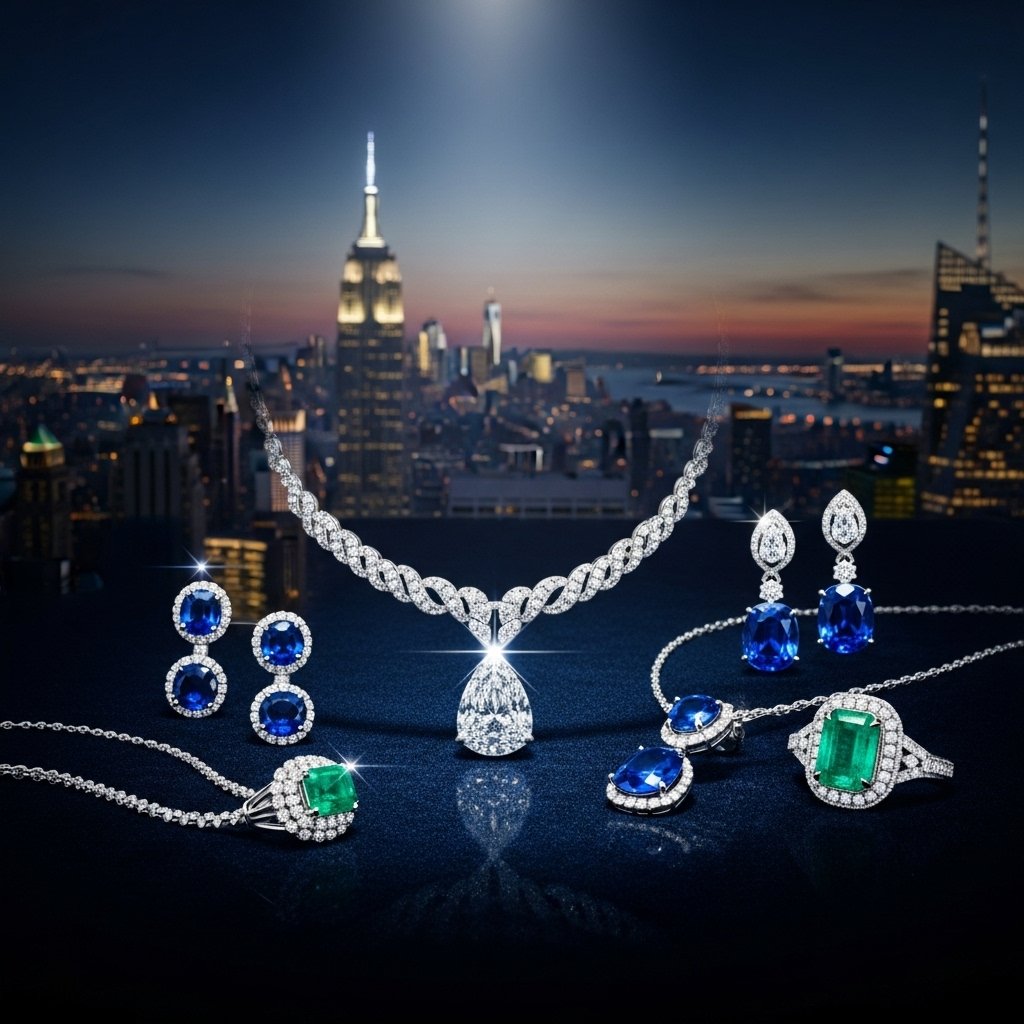
Harry Winston starts at $15,000. Cartier starts at $2,500. That price gap isn’t markup—it’s a business model statement. Harry Winston targets the top 0.1% with D-F colorless, IF-VVS clarity diamonds exclusively, while Cartier sells accessible luxury to the broader affluent market with F-H color and VS1-VVS stones. But here’s where it gets messy: Cartier pieces retain 70-81% resale value and move in 30-90 days, while Harry Winston jewelry holds 85-95% but takes 3-6 months to sell through auction houses. So which brand wins? Depends whether you’re buying a showpiece for the vault or everyday luxury you’ll actually wear.
The Price Gap That Tells the Whole Story
These brands aren’t competing—they’re serving different tax brackets.
Entry Points: $2,500 vs $15,000
Cartier’s Love bracelet starts at $7,350 for plain yellow gold, with smaller pieces (pendants, rings) hitting $2,500-$3,500. Harry Winston’s entry point sits around $15,000-$20,000 for simple diamond studs or pendants, with engagement rings starting at $30,000+. A Reddit user compared shopping experiences: Cartier feels accessible with pieces under $10K, while Winston requires “serious buyer” credentials just to browse.
Average Purchase: $8K-$25K (Cartier) vs $50K-$500K (Winston)
Cartier’s sweet spot targets $8,000-$25,000 purchases—Love bracelets, Panthère jewelry, mid-range engagement rings. Harry Winston’s average customer buys in the $50,000-$500,000 range, with 1-2 carat engagement rings routinely hitting $40,000-$150,000. Sotheby’s sold a 43.24-carat Harry Winston pear-shaped diamond ring for $2.4 million in 2021.
High Jewelry: Both Play at $1M+
Both brands produce haute joaillerie (high jewelry) exceeding $1 million, but Winston dominates auction records. The Gulf Pearl Parure sold for $4.2 million in 2006, while Cartier’s most expensive auction pieces hover around $2-3 million. At the ultra-high end, Winston’s diamond expertise gives them pricing power Cartier can’t match.
What You Actually Get for the Money
The price difference reflects genuine quality gaps—not just branding.
Harry Winston uses exclusively D-E-F colorless diamonds (the top three color grades on GIA’s D-Z scale) and FL to VS2 clarity, with most pieces featuring VVS1-IF stones. Their official bridal guide states: “Harry Winston’s expert gemologists select diamonds only from the top three color grades… the most precious and valuable”. They offer proprietary cuts (Winston Legacy, Sunflower) optimized for light performance.
Cartier typically uses F-H color diamonds and VS1-VVS clarity stones, which are excellent quality but one tier below Winston’s standards. A jewelry expert on PurseBlog noted: “Cartier tends to have a lower and thicker setting” compared to Winston’s precision mounting. Cartier focuses on classic brilliant cuts rather than proprietary designs.
The material cost difference is real. A 1-carat D/VVS1 diamond costs 30-50% more than a 1-carat G/VS1 diamond of identical cut quality. Winston’s premium reflects genuine gemological superiority, not just marketing.
Diamond Expertise: Winston Crushes This Category
Harry Winston earned the title “King of Diamonds” through decades of owning history’s most famous stones.
The “King of Diamonds” Reputation Is Earned
Harry Winston owned or sold the Hope Diamond (now in the Smithsonian), the Jonker Diamond (726 carats rough), and the Star of Sierra Leone (969 carats). The brand’s founder personally acquired more important historic diamonds than any other jeweler in the 20th century. This isn’t marketing—it’s gemological heritage Cartier can’t match.
Winston’s Diamond Standards = Museum-Grade
Beyond colorless D-F grades, Winston rejects diamonds with medium or strong fluorescence because it can cause haziness. They also limit selections to GIA Very Good and Excellent cuts, though independent reviewers note this isn’t as stringent as it sounds—GIA’s “Very Good” cut allows mediocre light performance. Still, Winston’s curation standards exceed 95% of jewelers globally.
A review comparing Winston vs Tiffany vs Cartier ranked Winston third for cut quality curation, noting: “If brilliant and beauty were really of utmost importance, why would a company settle for a lower-tier cut rating?”. Fair criticism, but Winston’s baseline still crushes most luxury brands.
Cartier’s Diamonds Are Excellent, Not Exceptional
Cartier uses G-H color diamonds for most pieces, which appear white to the naked eye but grade one tier below colorless. Their clarity standards (VS1-VVS) are excellent—completely eyeclean with tiny inclusions visible only under 10x magnification. For everyday jewelry, this is overkill. But for investment-grade pieces or heirloom engagement rings, Winston’s D-F colorless stones command 20-40% premiums at resale.
Engagement Ring Showdown: Winston by Knockout
If you’re buying an engagement ring worth $30K+, Winston delivers superior value despite higher prices.
Harry Winston offers custom design consultations with proprietary cuts (Winston Legacy cut optimized for brilliance, Sunflower cut for cushion shapes) unavailable elsewhere. A 1.08-carat D/VVS1 platinum solitaire costs approximately $42,000 at Winston. Designs emphasize the diamond—minimal metal, maximum light return.
Cartier’s 1895 Solitaire (their iconic engagement ring design since 1895) features classic four or six-prong settings with F-H color, VS1 clarity diamonds. Prices range $5,000-$100,000 depending on carat weight. The Ballerine and Destinée collections offer pavé and halo options. Designs are beautiful but standardized—you’re buying an established look, not custom artistry.
Resale/heirloom value: Harry Winston engagement rings retain 85-95% of retail and appreciate over decades. A pre-owned 0.57-carat Winston ring originally $18,500 sold for $7,400 (40% of retail), but that’s an outlier—most Winston pieces hold 80%+. Cartier engagement rings retain 70-80%, strong but below Winston.
Everyday Wearability: Cartier Dominates
Harry Winston jewelry sits in vaults. Cartier jewelry goes to brunch.
Cartier’s Icons Are Built for Daily Life
The Love bracelet (screw design in 18k gold) survives daily wear for decades—scratching shows, but structure remains intact. Juste un Clou (nail bracelet) and Panthère jewelry balance luxury with durability. You can wear a $7,350 Love bracelet to the gym (though you shouldn’t) without paranoia.
Harry Winston Jewelry Needs Security Guards
A Winston diamond necklace worth $150,000-$500,000 requires armed security for public wear. Even “entry-level” $30K pieces attract unwanted attention and theft risk. One YouTube reviewer noted: “Harry Winston watches feel a lot more like a piece of jewelry, a piece of arm candy… they genuinely glitter on your wrist”. Translation: you can’t wear them casually without looking like a target.
The “Which Can You Wear to Brunch?” Test
Cartier wins by default. A Love bracelet, Trinity ring, or Panthère pendant signals wealth without screaming “rob me”. Harry Winston pieces are formal event jewelry—galas, red carpets, museum fundraisers. If you can’t wear it regularly, its cost-per-wear skyrockets.
Brand Recognition: Cartier Wins the Street
Which brand actually gets recognized by normal wealthy people (not just jewelers)?
The red Cartier box generates instant global recognition—Paris, Tokyo, Dubai, New York. Walking through an airport with a Cartier shopping bag signals status to everyone. Harry Winston’s black-and-white logo is known in UHNW circles and jewelry industry professionals, but invisible to 95% of affluent consumers.
A PurseBlog discussion asked which brand is “more suitable for me” as a young buyer—consensus favored Cartier because “it’s more recognizable and wearable daily”. Harry Winston gets recognized at charity galas where guests arrive in Bentleys. Cartier gets recognized at Whole Foods.
Which matters for your personal brand? If you need strangers to know you’re wealthy, buy Cartier. If you want insiders to respect your jewelry knowledge, buy Winston.
Investment Value & Resale: Complicated Math
Both brands hold value well, but liquidity differs dramatically.
Cartier: 70-81% Retention, High Liquidity
Cartier averages 70-81% resale retention depending on collection (Love bracelet 70%, Panthère 80-85%, high jewelry 85-90%). Pieces sell within 30-90 days on authenticated platforms (The RealReal, Fashionphile, Rebag). A pre-owned Cartier Love Ring in rose gold retails around €1,800-2,200 new, resells for €1,400-1,800 (78% retention).
Harry Winston: 85-95% Retention, Low Liquidity
Harry Winston jewelry retains 85-95% of retail because the brand’s scarcity and diamond quality create consistent demand. But selling takes 3-6 months minimum through auction houses (Sotheby’s, Christie’s) or specialty dealers. You’re not listing Winston pieces on The RealReal—they require Sotheby’s authentication and targeted buyer outreach.
Diamond Banc notes: “Harry Winston… command strong resale prices due to their craftsmanship, brand prestige, and collector appeal”. True, but you need patience and auction house connections.
Vintage Winston > Contemporary Cartier at Auction
Vintage Harry Winston pieces from the 1950s-1970s achieve 200-500% appreciation at major auctions. Contemporary Cartier (post-2000) rarely exceeds retail at resale unless it’s high jewelry or rare limited editions. If you’re buying for multi-decade appreciation, Winston’s historical provenance creates stronger collector demand.
Where Each Brand Actually Sells
Liquidity matters when you need cash.
Cartier moves on The RealReal, Fashionphile, and Rebag within 30-90 days at 70-81% of retail. These platforms authenticate, list, and manage transactions—you ship the piece and receive payment in 1-2 weeks after sale. Direct buyers offer 60-70% for instant cash.
Harry Winston requires Sotheby’s, Christie’s, or specialty dealers like Diamond Banc. Auction houses take 20-25% commission and need 3-6 months from consignment to payment. Specialty dealers offer 70-85% for immediate purchase but require in-person authentication meetings. You can’t impulse-sell Winston jewelry—it’s a process.
Trade-off: maximum value (Winston) vs liquidity (Cartier).
Craftsmanship & Heritage: Both Elite, Different Philosophies
Both brands deliver world-class jewelry—just with different DNA.
Cartier: 177 Years of French Art Deco Legacy
Founded in 1847, Cartier pioneered Art Deco jewelry design with the Trinity ring (1924), Tutti Frutti colored gemstone pieces (1920s), and the Panthère motif (1914). Royalty across Europe and the Middle East wear Cartier—it’s old-money prestige with French elegance. Manufacturing is in-house at Swiss and French ateliers.
Harry Winston: 91 Years of American Diamond Mastery
Harry Winston opened in 1932 and built reputation on diamond sourcing and cutting expertise, not design heritage. The brand’s philosophy: let the diamond be the star, minimize the setting. It’s American luxury—bold, diamond-focused, red-carpet flashy. Manufacturing is New York-based with strict quality control.
Manufacturing: Both In-House, Winston More Exclusive
Cartier produces thousands of Love bracelets annually alongside high jewelry one-offs. Harry Winston produces hundreds of engagement rings and limited fine jewelry pieces, with most being custom or semi-custom. Lower volume = higher exclusivity = stronger resale scarcity premiums.
Celebrity & Red Carpet: Winston Owns Hollywood
Which brand do A-listers borrow for the Oscars? Winston, every time.
Harry Winston is the official jeweler of the Academy Awards, loaning multi-million-dollar pieces to Best Actress nominees annually. Their “Red Carpet Collection” exists solely for celebrity loans—$5-20 million necklaces that create billions in media impressions. Cartier loans to royalty and old-money events (Cannes, Monaco galas) but lacks Winston’s Hollywood dominance.
If you want your engagement ring associated with Oscars glamour, buy Winston. If you want your jewelry associated with Kate Middleton and Monaco royalty, buy Cartier.
US Market Positioning: Accessibility vs Exclusivity
Can you even access these brands regularly?
Cartier: 40+ US Boutiques + Department Stores
Cartier operates 40+ standalone boutiques across the US (New York, Los Angeles, Miami, Las Vegas, Dallas, Chicago) plus department store presence at Neiman Marcus and select locations. You can walk into most major cities and browse Cartier same-day.
Harry Winston: 12 US Salons
Harry Winston operates 12 exclusive salons in the US: New York (flagship Fifth Avenue), Beverly Hills, Los Angeles, Las Vegas, Miami, Dallas, and a few others. Most cities have zero Winston access—you’re traveling to shop there. Appointments often required for serious purchases.
Which Brand Matches Your Lifestyle?
If you’re in NYC or LA regularly, Winston access is feasible. If you’re in Atlanta, Seattle, or Phoenix, Cartier is your practical luxury option. Geography matters more than people admit.
The Verdict: Choose Your Battlefield
These brands serve different purposes.
Buy Harry Winston if:
-
Engagement ring budget exceeds $50,000
-
Diamond quality/investment priority (D-F colorless, IF-VVS clarity)
-
Auction/heirloom focus (85-95% retention, appreciate over decades)
-
Access to NYC/LA/Miami salons
-
Comfortable with 3-6 month resale timelines
Buy Cartier if:
-
Everyday luxury ($2,500-$50,000 range)
-
Brand recognition matters (global awareness)
-
Liquidity important (sell in 30-90 days if needed)
-
Wearable jewelry for daily/weekly use
-
Live outside major Winston markets
Portfolio approach: Own both for different purposes. A Cartier Love bracelet for daily wear, a Harry Winston engagement ring for heirloom value.
FAQ
Is Harry Winston better quality than Cartier?
Yes for diamonds—Winston uses exclusively D-F colorless, IF-VVS clarity stones versus Cartier’s F-H color, VS1-VVS standards. Craftsmanship is comparable, but Winston’s gemological standards are higher.
Which holds value better: Harry Winston or Cartier?
Harry Winston retains 85-95% versus Cartier’s 70-81%, but Winston takes 3-6 months to sell through auctions while Cartier moves in 30-90 days on resale platforms.
Why is Harry Winston so much more expensive than Cartier?
D-F colorless diamonds cost 30-50% more than F-H stones, Winston uses proprietary cuts, lower production volumes create scarcity, and brand positioning targets top 0.1%.
Should I buy a Harry Winston or Cartier engagement ring?
Winston if budget exceeds $50K and diamond quality is priority; Cartier if budget is $5K-$50K and brand recognition/wearability matter more.
Which brand is more prestigious: Harry Winston or Cartier?
Cartier has broader global recognition (177 years, royalty association); Winston has insider prestige (King of Diamonds, Oscars jeweler, UHNW clientele).
References
https://mygemma.com/blogs/news/top-designer-jewelry-brands
https://artgoldjewelry.com/blogs/news/harry-winstons-stunning-jewels-essence-linea-3mm-ring-bold-18k-gold
https://www.reddit.com/r/jewelry/comments/1kjd7og/which_luxury_brands_actually_make_a_good_purchase/
https://forum.purseblog.com/threads/cartier-or-harry-winston.288706/
https://beyond4cs.com/reviews/harry-winston/
https://www.harrywinston.com/en/engagement-and-bridal/bridal-guide
https://www.diamondbanc.com/insider-news/the-five-best-value-retaining-jewelry-brands/
https://www.sothebys.com/en/articles/a-closer-look-at-the-top-5-most-expensive-harry-winston-rings
https://auctentic.com/blog/ring/reselling-designer-rings-value